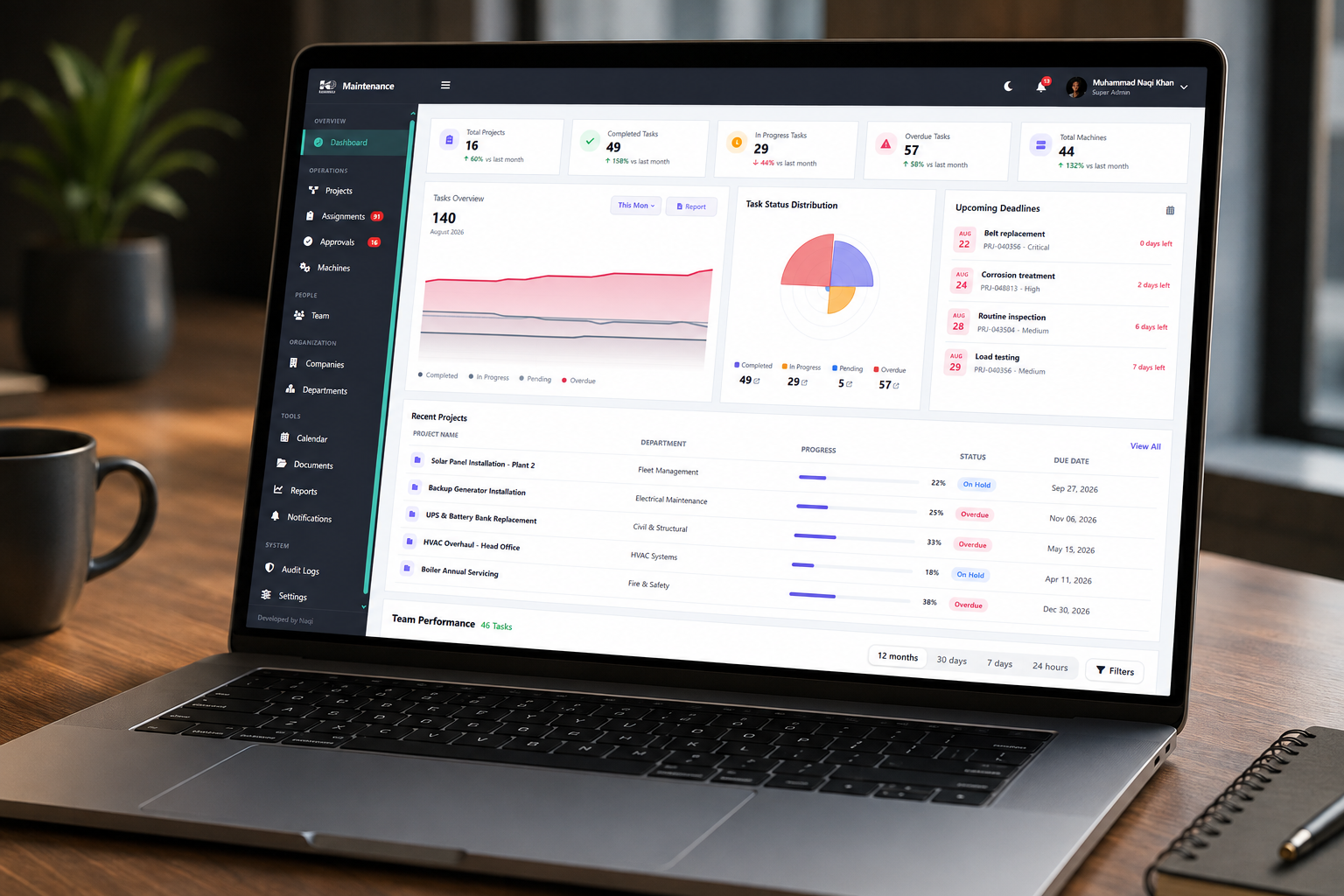
Modern businesses rely heavily on machines, equipment, and technical assets to keep their operations running efficiently. When equipment maintenance is handled through spreadsheets, paper records, phone calls, or scattered communication, it can become difficult to track maintenance activities, assign engineers, monitor machine conditions, and maintain a complete history of work performed. A Machine Maintenance Management System provides a centralized digital solution for managing these activities and gives organizations better control over their maintenance operations.
What Is a Machine Maintenance Management System?
A Machine Maintenance Management System is a centralized software solution designed to manage machines, maintenance activities, engineers, technicians, projects, assignments, approvals, schedules, documents, notifications, reports, and maintenance history. Instead of maintaining separate records for different machines and maintenance tasks, organizations can manage their information through one structured platform. The system helps maintenance teams organize daily activities, track assigned work, monitor progress, and maintain a clear record of machine-related operations.
Centralized Machine and Asset Management
One of the core features of the system is centralized machine management. Each machine can have its own detailed record containing important information such as machine name, asset code, serial number, model, manufacturer, category, location, project, company, department, purchase information, warranty details, cost, operating hours, condition, and current status. Keeping this information in one place allows authorized users to quickly understand the current condition and background of each machine.
Maintenance Assignment Management
Maintenance work often needs to be assigned to specific engineers or technicians. The system provides a structured assignment workflow where maintenance tasks can be created and assigned to responsible team members. Managers or authorized users can monitor assignments, review their progress, and ensure that maintenance responsibilities are clearly defined. This reduces confusion and helps teams understand what work needs to be completed and who is responsible for it.
Project-Based Maintenance
Organizations may operate multiple projects, departments, or locations, with different machines and maintenance requirements. The system can organize machines and maintenance activities according to projects, companies, and departments. This makes it easier for management to monitor maintenance activities across different operational areas and understand where resources are being utilized.
Engineer and Technician Management
Maintenance operations depend on technical staff who are responsible for inspecting, repairing, servicing, and maintaining equipment. The system provides a structured way to manage engineers and technicians and connect them with their assigned maintenance activities. This allows management to track responsibilities and monitor workload while giving technical teams a clear view of their assigned tasks.
Maintenance Progress Tracking
Knowing that a task has been assigned is not enough. Management also needs to know whether the work has started, what progress has been made, and whether the task has been completed. Progress tracking allows responsible users and managers to monitor maintenance activities throughout their lifecycle. This provides better visibility into ongoing work and helps identify tasks that may require additional attention.
Approval and Revision Workflow
Some maintenance operations require management approval before or after work is performed. A structured approval workflow allows authorized users to review assignments and maintenance information before final confirmation. Revision functionality can also be used when changes are required, helping ensure that updates are properly reviewed instead of being handled through informal communication.
Batch Machine Assignments
When several machines require similar maintenance activities, creating individual assignments manually can take unnecessary time. Batch assignment functionality allows maintenance work to be organized across multiple machines, making it easier to distribute tasks to engineers or technicians. This can be especially useful for large projects where multiple assets need inspection, servicing, or maintenance.
Maintenance Scheduling and Calendar
Planning maintenance activities is an important part of preventing operational interruptions. A calendar-based approach provides teams with a clearer view of scheduled assignments and upcoming maintenance work. By organizing maintenance activities around dates and schedules, teams can better plan resources and avoid unnecessary delays.
Documents and Maintenance Records
Maintenance activities often involve supporting documents, reports, technical information, and other files. A centralized system can keep relevant documents associated with maintenance activities and machine records. This creates a more organized digital history and makes important information easier to access when required.
Notifications and Alerts
Timely communication is essential for maintenance operations. Notifications can inform users about new assignments, pending approvals, changes, or other important maintenance activities. Instead of relying entirely on manual follow-ups, system notifications help keep responsible users informed about activities that require their attention.
Maintenance History
A machine's maintenance history can provide valuable information about its condition and previous work. Recording maintenance activities creates a historical record that can help management understand what work has been performed on an asset. This can support better decision-making when planning future maintenance, evaluating equipment condition, or reviewing recurring issues.
Role-Based Access and Permissions
Maintenance management systems often contain operational and technical information that should only be accessible to authorized users. Role-based permissions allow organizations to control access to different modules and functions. Users can be provided with the permissions required for their responsibilities, while sensitive management functionality can remain restricted to authorized personnel.
Reports and Management Visibility
Management needs accurate information to evaluate maintenance performance and operational conditions. A centralized system can provide reports and organized information related to machines, assignments, maintenance activities, engineers, projects, and other operational areas. These reports can help management identify trends, monitor workloads, review completed activities, and make more informed decisions.
Audit and Activity Tracking
Accountability is an important part of business software. An activity and audit log can record important actions performed within the system, providing a history of system activity. This helps organizations understand who performed an action and when it occurred, improving transparency and making it easier to review important changes.
Improving Maintenance Team Coordination
Maintenance work often involves multiple people, departments, and management levels. Without a centralized platform, communication can become fragmented and important information may be difficult to find. A maintenance management system brings relevant information into one environment, helping engineers, technicians, managers, and administrators coordinate their work more effectively.
Reducing Manual Maintenance Processes
Traditional maintenance management may involve spreadsheets, paper forms, manual registers, emails, and repeated follow-ups. These methods can consume significant time and make information difficult to maintain. Digitizing maintenance workflows allows organizations to reduce repetitive manual tasks and maintain operational information in a structured format.
Preventing Unnecessary Downtime
Unexpected machine failures can have a direct impact on business operations. Proper maintenance planning and tracking can help organizations identify maintenance requirements earlier and ensure that assigned work is followed through. By maintaining machine information, maintenance history, schedules, and task progress, teams can work toward reducing avoidable equipment downtime.
Better Resource Management
Maintenance management is not only about machines; it is also about people and resources. Management needs to understand which engineers are assigned to specific tasks, which machines require attention, and where maintenance activities are taking place. Centralized information makes it easier to organize technical resources and distribute work according to operational requirements.
My Machine Maintenance Management System Project
I developed a Machine Maintenance Management System to centralize maintenance operations and provide organizations with a structured platform for managing machines, projects, engineers, technicians, assignments, approvals, schedules, documents, notifications, reports, and activity history. The system was designed to replace scattered maintenance processes with a connected digital workflow where maintenance activities can be created, assigned, monitored, reviewed, and maintained within one platform.
Conclusion
A Machine Maintenance Management System can significantly improve the way organizations manage their equipment and maintenance operations. By bringing machine records, assignments, engineers, scheduling, approvals, documents, notifications, reports, and maintenance history into one centralized system, businesses can achieve better visibility and stronger coordination across their maintenance teams. The purpose of such a system is not simply to store machine information but to create a complete maintenance workflow that helps teams organize their work, monitor progress, maintain accountability, and make better operational decisions. As businesses continue to depend on complex machinery and technical assets, having a reliable digital maintenance management system can become an important part of maintaining operational efficiency and long-term asset performance.